
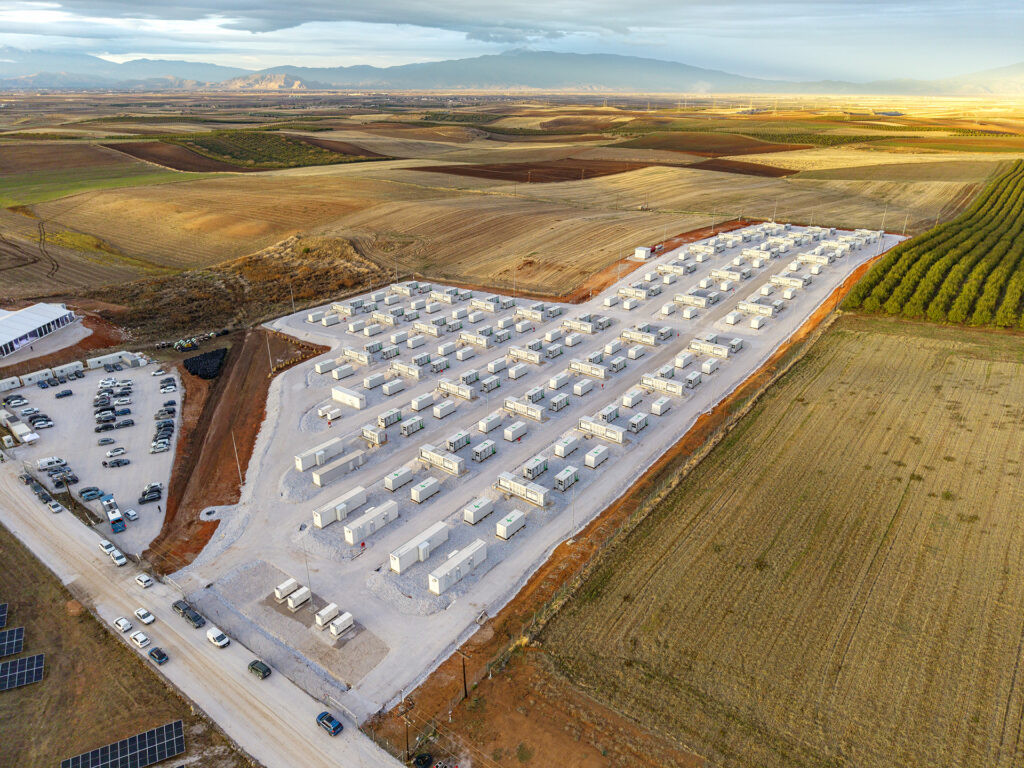
METLEN and Karatzis Group have inaugurated a 330 MW / 790 MWh battery energy storage system in Larissa, Thessaly – Greece’s largest standalone storage facility and one of the largest of its kind in Europe. In this interview, METLEN’s Nikos Papapetrou (Chief Executive Director, Renewables and Energy Transition Platform) and Giannis Giannakopoulos (Chief Executive Director, Integrated Utility) discuss what the project means for energy security, renewables integration and Europe’s battery storage market through to 2030.
Can you tell us about METLEN’s new large-scale Battery Energy Storage System in Larissa, Greece and explain why this project is such an important milestone for your company, Greece, and Europe’s energy transition?
Nikos Papapetrou: The project in Larissa is a 330 MW / 790 MWh standalone battery energy storage system, developed through the strategic partnership between METLEN and the Karatzis Group. It is a landmark national energy infrastructure project: the largest standalone storage facility in Greece and one of the largest projects of its kind in Europe.
For METLEN, it demonstrates our ability to deliver complex, next-generation energy infrastructure at scale. Our capabilities extend across the full value chain, from development and engineering to construction, operation and energy management. In that, we are supported by our international experience in battery projects.
For Greece, this is a strategic investment in the country’s energy security. It will help strengthen grid stability, manage fluctuations in electricity supply and demand, and enable the country to derive greater value from its rapidly expanding renewable energy capacity.
At the European level, it is an example of the infrastructure now required to move the energy transition into its next phase. Europe’s challenge is no longer simply to produce more renewable electricity; it must also be able to store, manage and deploy that electricity when it is most needed.
Throughout my career, I have worked closely with a wide range of stakeholders, including NGOs, industry associations, and public-sector actors, helping to build consensus around key policy priorities such as coal phase-out, renewable deployment, and just transition. I have also contributed to a number of studies and policy briefs. This cross-sectoral experience is what I now bring into my current role.
Battery storage is one of the fastest-growing clean energy technologies in Europe today. What’s driving this rapid growth, and why do you believe storage has become such a critical piece of the energy system?
Nikos Papapetrou: The rapid growth of storage is being driven by a fundamental change in the way electricity systems operate. As the share of variable renewable generation increases, production and demand do not always coincide. At certain times, the system may have more renewable electricity than it can absorb; at others, additional flexible capacity is needed to meet demand.
This is creating growing pressure on grids, greater risks of renewable curtailment and a clear need for fast, flexible balancing resources. Large-scale batteries can respond rapidly, absorbing excess electricity and releasing it when the system needs it.
Storage should therefore no longer be regarded as a supplementary technology. It is becoming core energy infrastructure, and that’s how we see it at METLEN: essential to grid stability, security of supply and the efficient integration of renewables. The next stage of the transition is not only about how much clean power Europe can generate, but how intelligently it can manage that power.
Europe continues to deploy record levels of renewable energy. How does large-scale battery storage help unlock the full value of solar power, and what role will it play in building a more resilient electricity system?
Giannis Giannakopoulos: Solar generation is abundant during daylight hours, but electricity demand does not always peak at the same time. Without sufficient flexibility, periods of high solar output can lead to congestion, low or negative prices and the curtailment of clean electricity.
Large-scale storage helps address that mismatch. It can absorb surplus solar power and make that energy available later, when demand is higher or the system needs it most. This improves the utilisation of renewable assets, reduces wasted clean energy and makes additional solar deployment easier for the grid to accommodate.
Storage also contributes to resilience by providing flexibility for rapid response and supporting system balancing. In practical terms, it makes renewable electricity more manageable and dependable as part of the energy mix. Alongside stronger grids, interconnections and digital energy management, storage will be one of the foundations of Europe’s future electricity system.
Energy security and industrial competitiveness have become top priorities for European leaders. How can investment in battery storage help deliver more reliable, affordable energy while strengthening Europe’s economic competitiveness?
Giannis Giannakopoulos: Reliable and competitively priced electricity is essential for both households and for European industry. Storage can contribute to both objectives by reducing renewable energy curtailment, making better use of low-cost domestic generation and providing flexibility during periods of pressure on the electricity system.
By shifting electricity from periods of surplus to periods of higher demand, batteries can help moderate price volatility and reduce reliance on more expensive balancing solutions. They can also strengthen security of supply by giving system operators an additional, rapidly deployable tool to maintain balance and stability.
For European competitiveness, the wider point is that clean generation alone is not enough. Europe needs an integrated energy system in which renewables, storage, grids and energy management work together. Investing in that system can help provide industry with more stable and predictable energy conditions, reduce exposure to external energy shocks and strengthen Europe’s industrial and technological capabilities.
Looking ahead to 2030, what would success look like for the battery storage sector in Europe, and what message would you like policymakers and industry leaders to take away from this project?
Nikos Papapetrou: By 2030, success would mean that storage is treated as an integral part of Europe’s energy architecture rather than as simply an additional tool for renewable generation. Europe should have sufficient storage capacity to support its renewable ambitions, reduce curtailment, improve grid flexibility and strengthen security of supply across interconnected markets.
Achieving that will require stable regulatory frameworks, faster permitting and grid connections, appropriate market signals for flexibility and long-term visibility that allows investors to commit capital at scale. It is also important that storage, renewable deployment and network development must be planned together rather than through separate policy tracks.
The message from Larissa is straightforward: the technology is available, the engineering capabilities exist and major projects can be delivered, so the priority now is to create the conditions to replicate them at speed and scale. Europe must move from recognising the storage gap to closing it. This project shows that Greece and European companies such as METLEN can play a leading role in that effort.
Giannis Giannakopoulos: By 2030, battery storage will be an increasingly important part of Europe’s energy system. Effective energy management will enable operators to respond to market opportunities, optimise renewable generation and improve the commercial performance of their assets as market conditions evolve.
For policymakers and industry leaders, an important step is to develop market frameworks that recognise and reward the flexibility storage provides. This would help ensure that storage can contribute fully to a more competitive and resilient European energy system.
The message from Larissa is clear: the success of storage depends not only on deploying high-quality assets, but also on having the expertise and advanced optimisation capabilities to operate them effectively. This combination can turn storage into a source of sustainable commercial value while supporting Europe’s energy transition.
By shifting electricity from periods of surplus to periods of higher demand, batteries can help moderate price volatility and reduce reliance on more expensive balancing solutions. They can also strengthen security of supply by giving system operators an additional, rapidly deployable tool to maintain balance and stability.
For European competitiveness, the wider point is that clean generation alone is not enough. Europe needs an integrated energy system in which renewables, storage, grids and energy management work together. Investing in that system can help provide industry with more stable and predictable energy conditions, reduce exposure to external energy shocks and strengthen Europe’s industrial and technological capabilities.
Do you want to find out more
about this topic?
these might be interesting to you as well


